
For several years, the dominant question surrounding artificial intelligence has been remarkably simple: Will AI take my job?
That question is rapidly becoming inadequate. AI is now being deployed at enough scale that we can begin seeing something more consequential: what happens after organizations integrate it.
Companies are discovering enormous pools of productive capacity. Small businesses using AI are showing signs of expanding rather than simply shrinking their workforces. Financial institutions are preparing for AI agents that can transact on behalf of humans. American workers are moving between jobs at unusually low rates. And the investment required to build the AI economy has become large enough for central bankers to discuss its implications for financial stability.
Each development matters individually. Together, they point to a larger shift: the AI economy is moving from experimentation into reorganization.
Work is being redesigned. Authority is being redesigned. Career paths are being redesigned. Capital markets are being reorganized around expectations of extraordinary future productivity. The winners will be determined by much more than access to the best AI model.
SIGNAL 1: AI Can Eliminate Work Without Eliminating the Worker
One of the most important AI workforce stories this week came from Wipro. The global technology-services company says its AI initiatives have generated productivity improvements equivalent to the work of approximately 20,000 employees. [S01]
The number immediately attracts attention. The more important part is what Wipro says happened to the people: they were redeployed. Employees have been shifted into other projects and roles, including work involving AI systems, while the company has invested heavily in retraining. Reuters reports that more than 100,000 Wipro employees have been trained and certified in advanced AI skills. [S01]
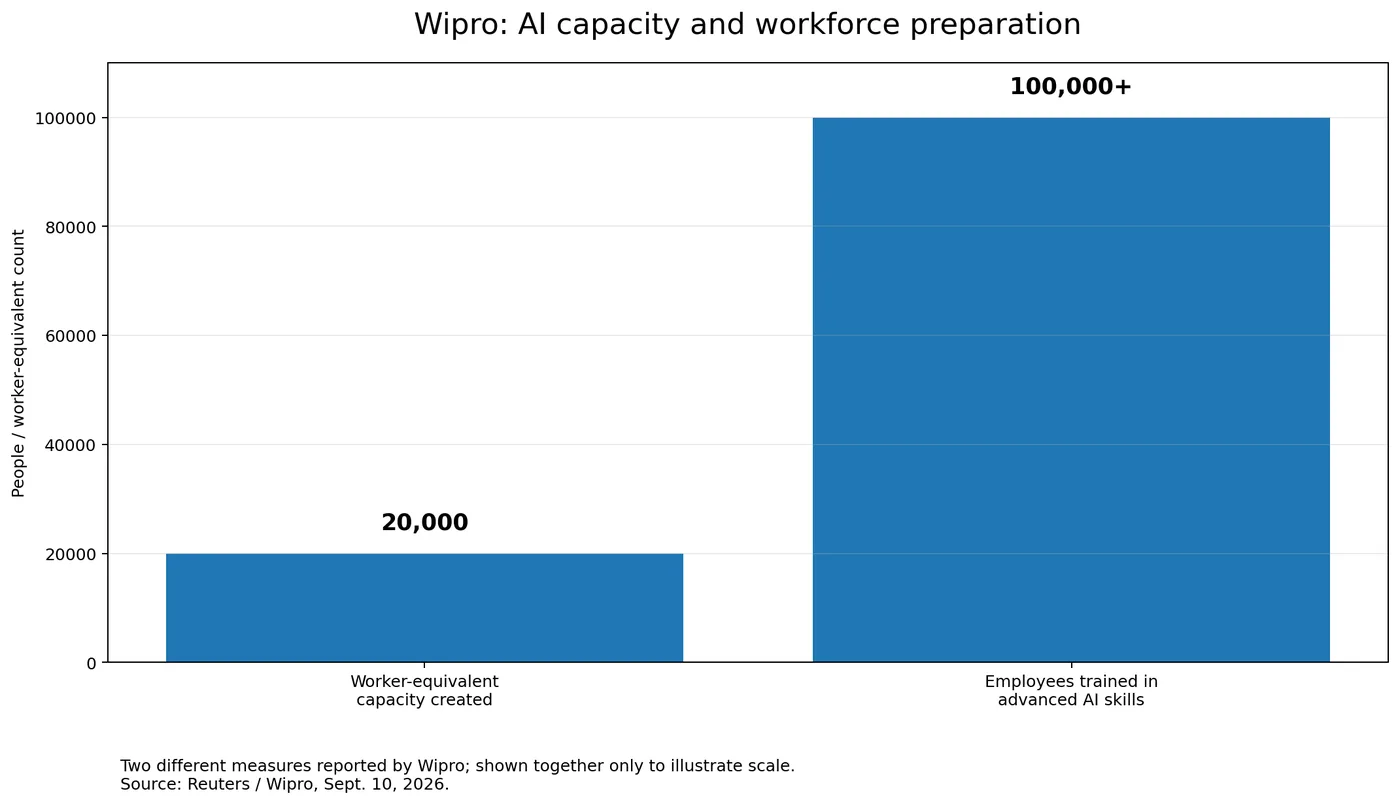
That introduces a distinction every executive team needs to understand. If AI creates 20,000 employees worth of additional productive capacity, management can interpret the development primarily as a cost-reduction opportunity, or it can ask what the organization can now accomplish with that newly available capacity.
Those choices can produce very different companies. Cost reduction may improve margins quickly. Reinvested capacity can support new products, better customer experience, faster innovation, new markets and work the organization previously could not economically justify.
Wipro itself is describing a shift from productivity improvement toward outcomes such as customer experience and new revenue opportunities. [S01]
AI also forces organizations to confront the difference between work performed and capability possessed. Workers carry customer history, relationships, exceptions, judgment, workarounds, context, informal networks and tacit knowledge accumulated through experience. A salary appears clearly on a spreadsheet. The value of institutional memory rarely does.
The career signal
Professionals should pay close attention when parts of their jobs become automated. Defending every task can become a losing strategy. A stronger question is: If AI performs 30 percent of what I currently do, what can I do with the capacity I just regained?
Can you take responsibility for larger problems, serve more customers, manage AI-assisted workflows, develop new expertise, improve decision-making, move closer to revenue or take responsibility for outcomes that previously sat above your role? AI-created capacity becomes career-threatening when an organization concludes that nothing valuable remains for the employee to do. It becomes career leverage when that employee converts capacity into greater contribution.
SIGNAL 2: AI May Help Some Companies Hire More People
The second signal complicates the employment story further. New research reported by Axios from payroll and HR platform Gusto suggests that some very small businesses adopting AI are expanding their teams faster than businesses that have not adopted it. [S02]
Among businesses with fewer than 10 employees, AI adopters reportedly increased headcount by approximately 10 percent during the first year following adoption. Across the broader group studied, businesses using AI grew staff faster than non-users. [S02]
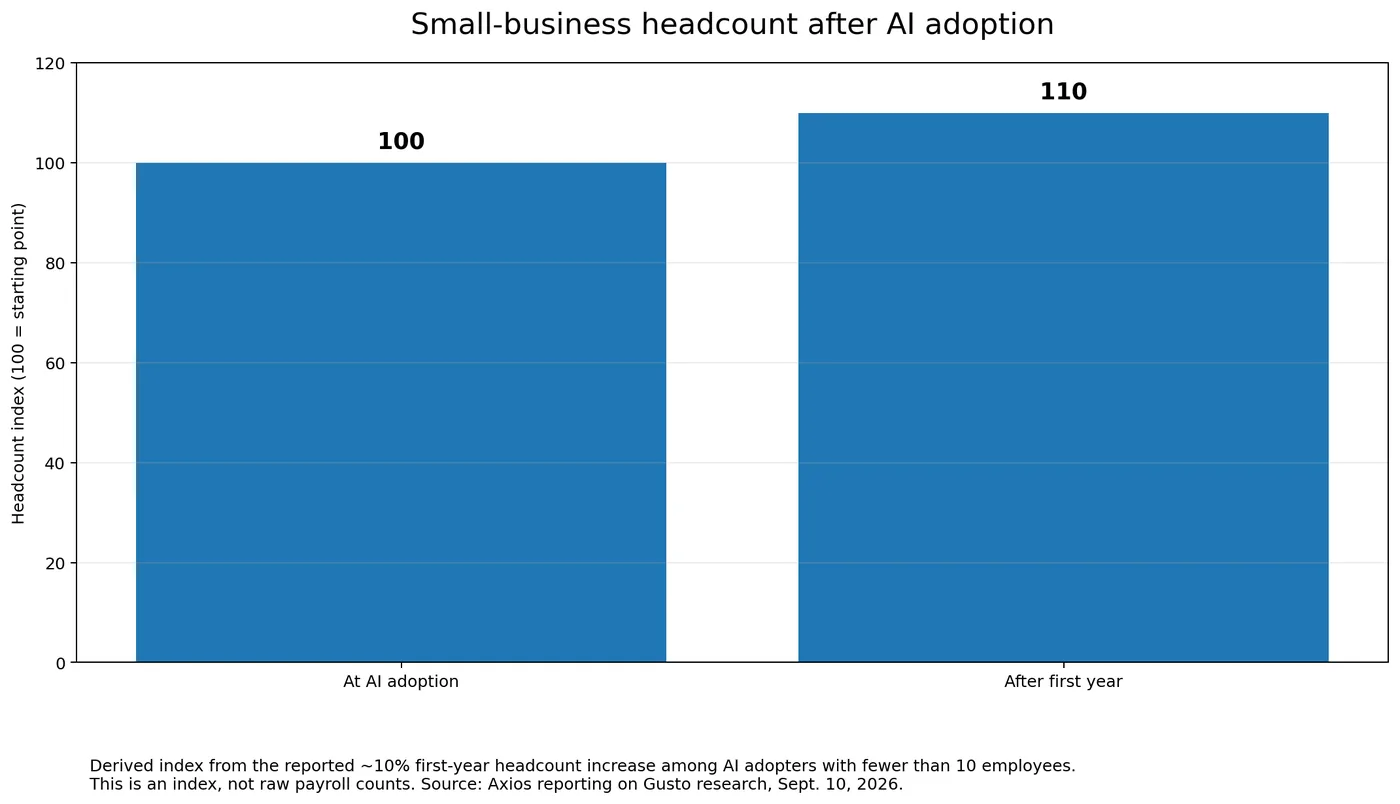
The research has an important limitation: it is observational. It shows an association between AI adoption and faster hiring among these businesses; it does not establish that AI itself caused the increase. [S02]
Still, the finding deserves attention because it challenges the simplest model of AI and employment. More automation does not automatically mean fewer workers.
Small businesses operate under a different economic equation. A five-person company may need marketing, sales support, research, bookkeeping, customer service, operations, analysis, content creation and administrative support. Historically, acquiring all of those capabilities required hiring people, outsourcing the work or doing without them.
AI changes the minimum economic scale required to possess some of those capabilities. A small company can conduct research it could not previously afford, produce more marketing, research prospects faster, handle more customer-service volume and analyze information that once required outside specialists.
That increased capability can support growth. Growth creates customers. Customers create additional work. Additional work can create jobs.
A plausible future is therefore one in which AI reduces the number of people required to perform a fixed quantity of work while simultaneously increasing the number of businesses capable of reaching meaningful scale.
The career signal
Professionals should watch where AI causes capability creation rather than looking exclusively for job destruction. Some of the most interesting future opportunities may emerge in smaller organizations that suddenly become capable of competing at much larger scale.
A useful career question is: Where is AI making previously impossible businesses economically viable? Those businesses may become tomorrow’s employers.
SIGNAL 3: AI Agents Are About to Need Something Resembling an Identity System
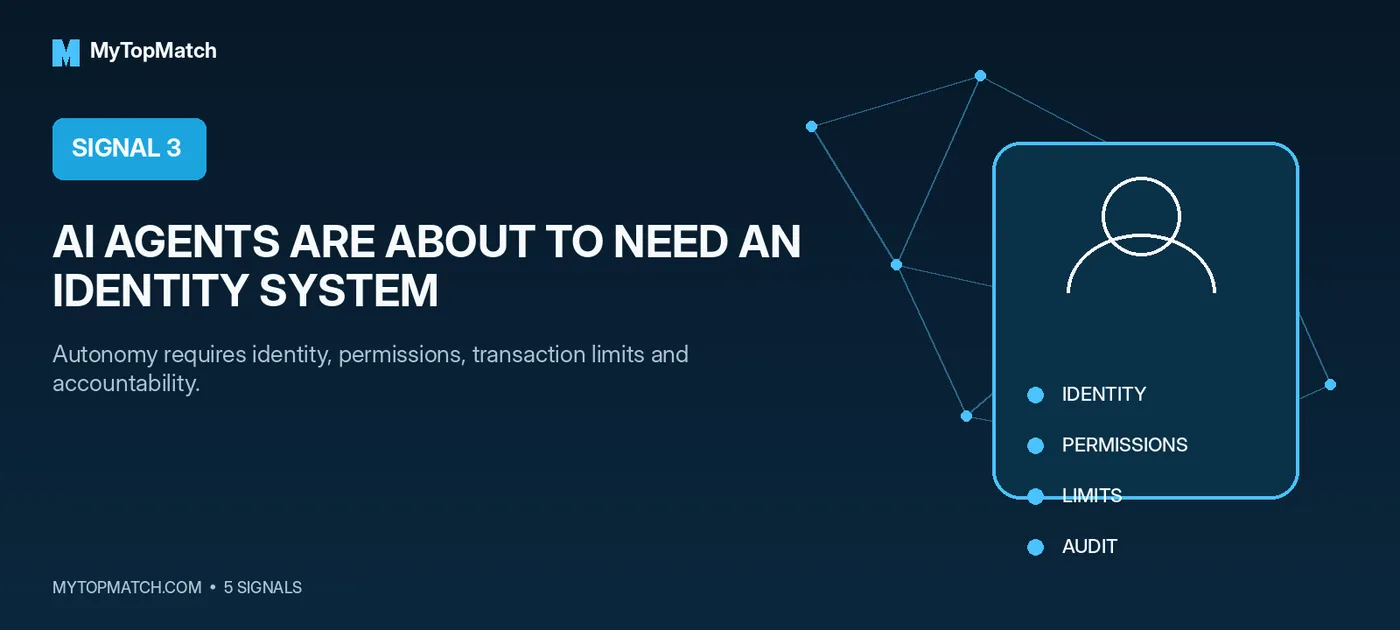
The third signal appears to be about payments. It is actually about something much bigger. Visa, Mastercard and Ant International announced a joint effort to establish standards for identifying and verifying AI agents capable of making purchases on behalf of people. [S03]
For most of the generative-AI era, users have asked machines questions and received answers. Agentic AI changes that relationship because the system can act.
A future AI agent might book an airline ticket, reserve a hotel, renew a subscription, order supplies, negotiate with a vendor, select among options or make a payment. Once an artificial system can take consequential actions, organizations need answers to questions humans have managed through institutional systems for centuries.
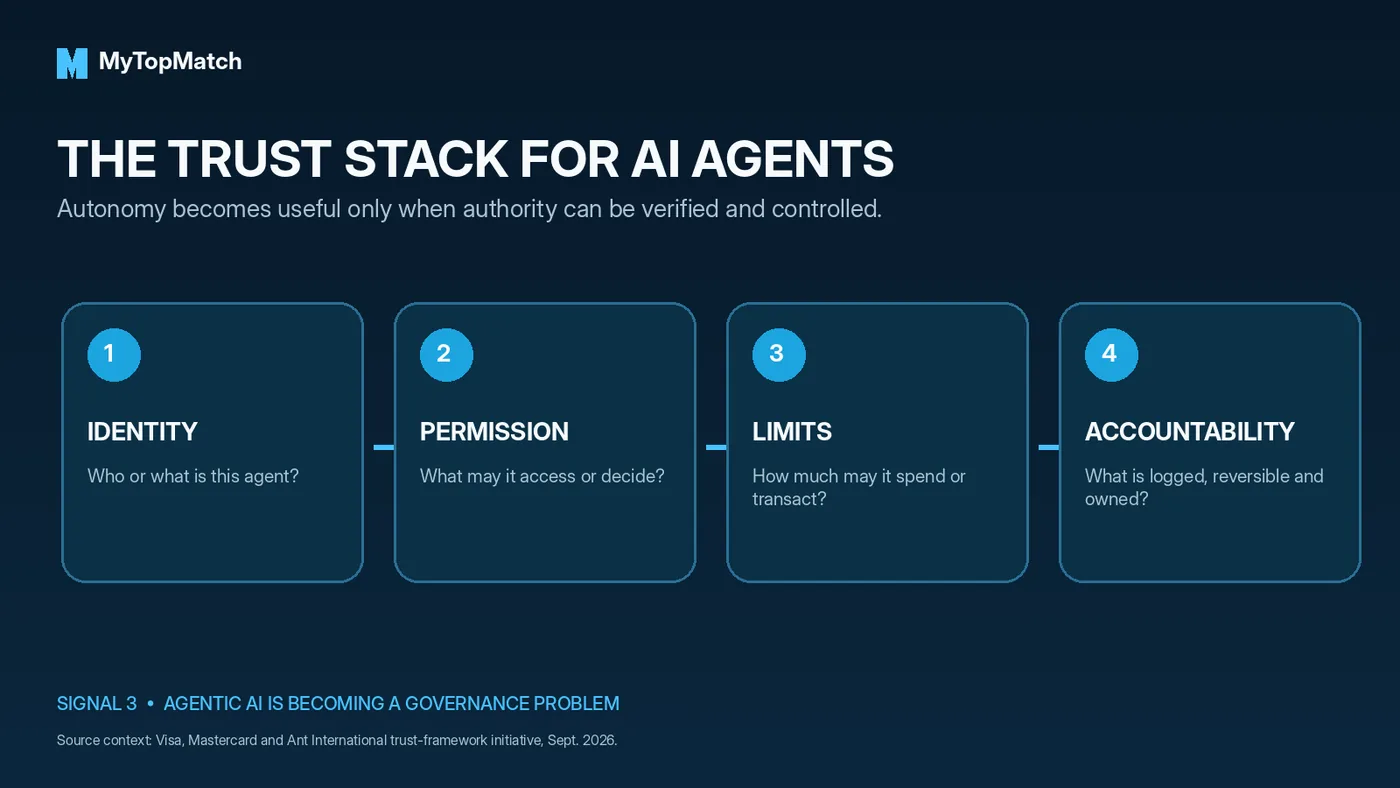
Who authorized this actor? What authority does it possess? How much can it spend? Which accounts can it access? How long does permission last? Can that permission be revoked? How do we know the agent has not been compromised? Who is accountable if something goes wrong?
These are questions of identity, permission, authority and governance. Employees receive credentials, roles, approval limits and access permissions. AI agents will require analogous controls.
That means one of the biggest developments in AI may involve something less glamorous than intelligence: trust infrastructure.
The career signal
Knowing how to prompt a chatbot represents one level of proficiency. Designing a workflow in which autonomous systems have defined permissions, escalation rules, decision rights and accountability represents a much more valuable level.
The professional opportunity moves toward questions such as: What should the machine be allowed to decide? When must a human intervene? How do we verify what occurred? Who owns the outcome? These are management questions as much as technology questions.
SIGNAL 4: America May Have a Career-Mobility Problem
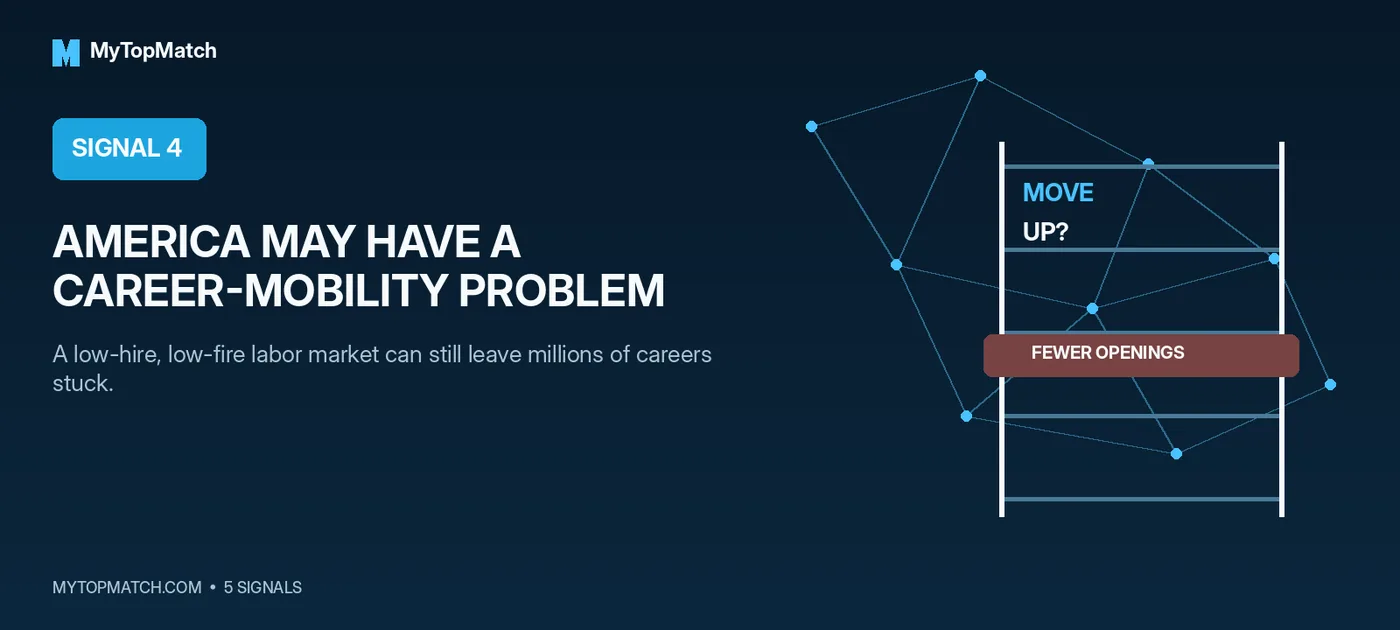
While AI accelerates change inside organizations, the American labor market is experiencing an almost opposite force: workers are staying put. The Wall Street Journal reports that U.S. workers are switching jobs at rates similar to the period following the 2008–09 financial crisis, in an environment often described as low hire, low fire. [S04]
At first glance, that can look stable. For professionals attempting to advance, stability can become stagnation.
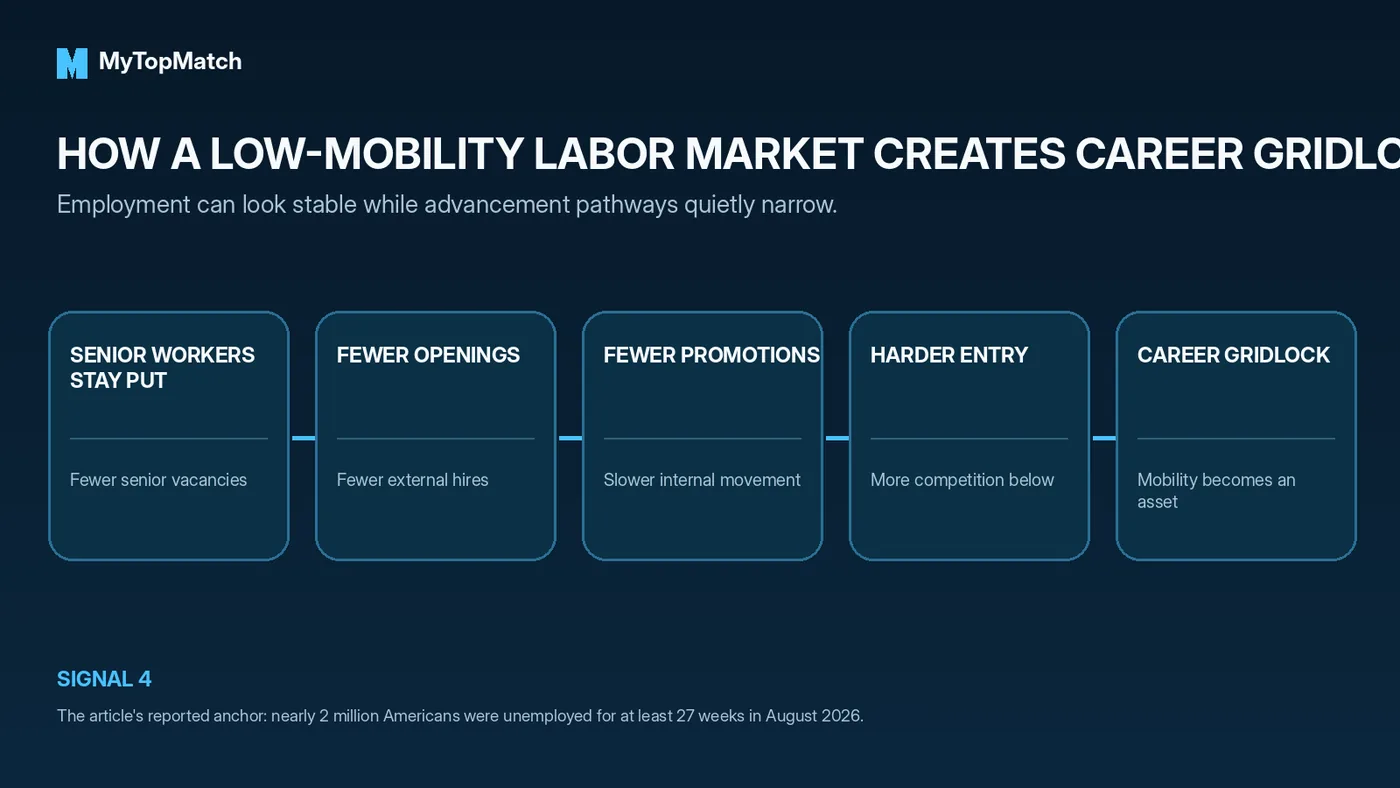
Labor markets depend on movement. A senior executive leaves. Someone moves up. That person’s role opens. Someone else advances. Another vacancy appears beneath them. External candidates enter. Teams reorganize. Compensation gets renegotiated. Careers move through chains of openings.
When people stop leaving, those chains slow down. Fewer senior exits can mean fewer promotions, fewer external openings and greater competition for entry points.
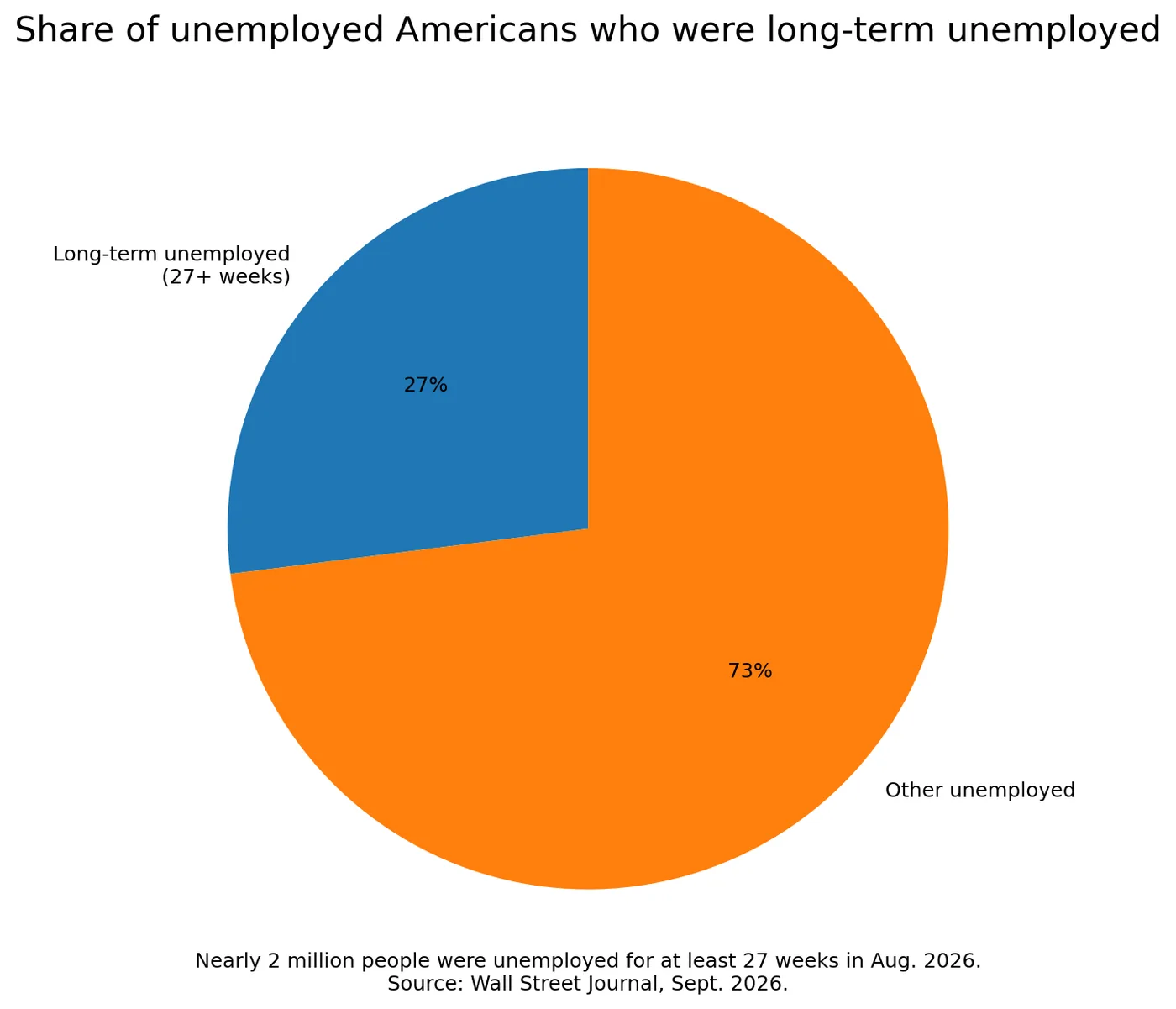
The August 2026 Employment Situation from the U.S. Bureau of Labor Statistics adds another warning signal: 1.9 million people had been unemployed for 27 weeks or more, representing 27.0 percent of all unemployed people. [S05]
This creates an important distinction: a labor market can have relatively low unemployment while still producing weak career mobility. Someone can have a job and still have few realistic opportunities to advance. Someone can be highly qualified and still struggle because the positions above them rarely open.
AI may intensify parts of this dynamic. If companies can increase output without proportionally increasing headcount, fewer external openings may appear even when companies themselves are growing.
The career signal
Professionals may need to become less dependent on vacancy-driven advancement. That makes internal mobility, professional evidence, relationship development and capability expansion increasingly important.
Waiting for the perfect job posting to appear is a passive strategy. A tighter market rewards professionals who continuously build evidence of what they can do, broaden the people who understand their capabilities and create multiple pathways through which opportunities can reach them.
Your current position matters. Your ability to create your next choice matters just as much.
SIGNAL 5: AI Investment Has Become Large Enough to Matter to the Financial System
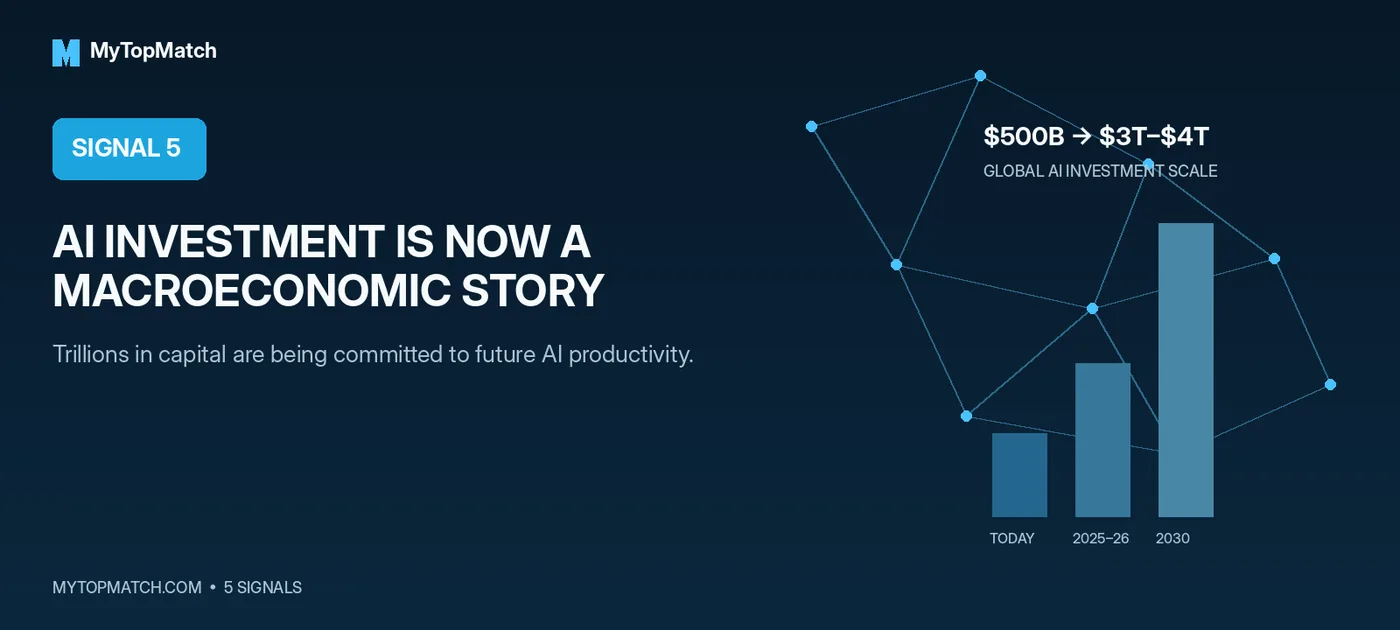
The fifth signal operates on a different scale. The Bank for International Settlements is now discussing AI investment as a potential financial-stability issue. [S06]
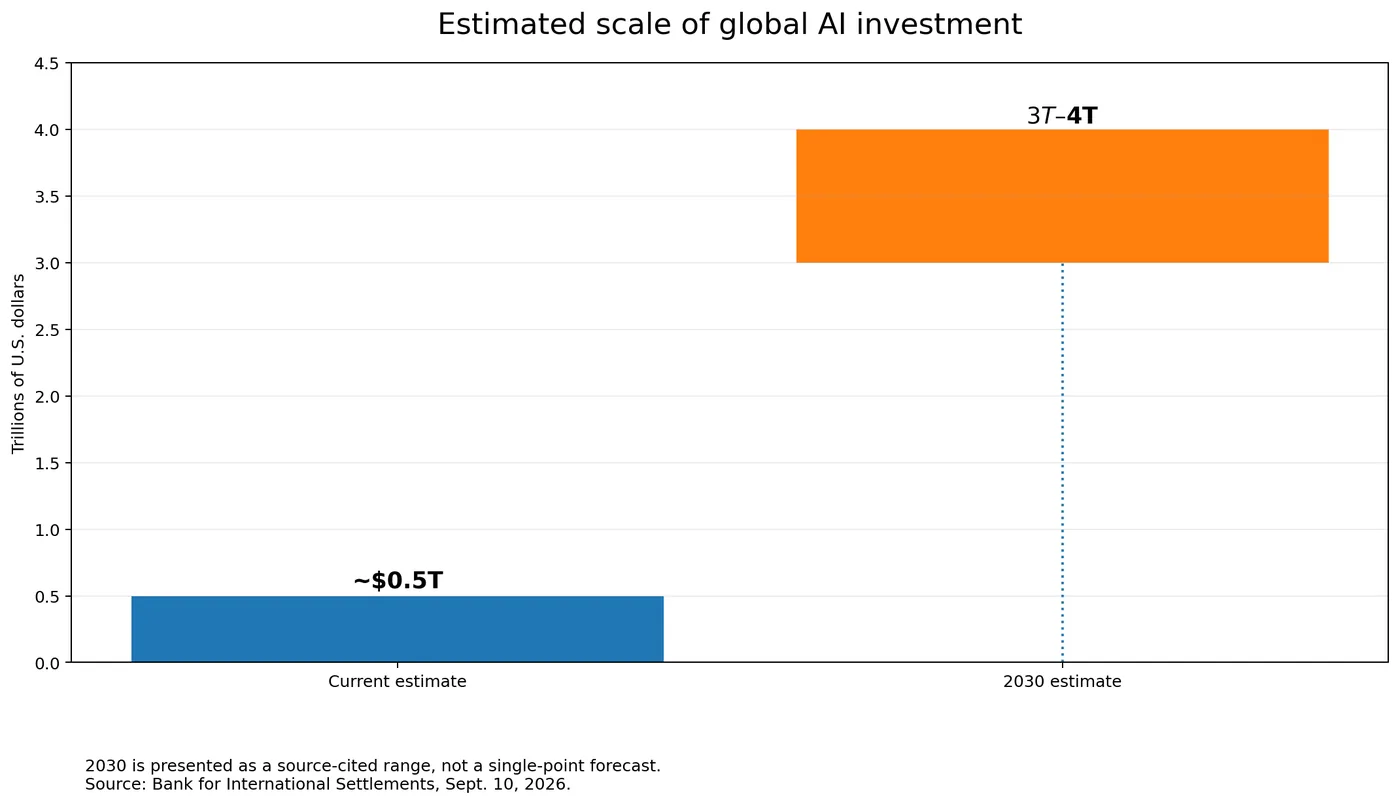
According to a September 10 speech by BIS General Manager Pablo Hernández de Cos, the five largest technology companies are set to spend more than $1 trillion on AI-related capital expenditure during 2025 and 2026. Industry expectations cited by the BIS put global AI-related investment at roughly $3 trillion to $4 trillion by 2030, up from around $500 billion today. [S06]
The investment is flowing into data centers, specialized semiconductors, cloud infrastructure, hardware and the physical systems required to train and operate increasingly capable AI models. The BIS notes that a growing portion of the boom is financed through debt and private credit, increasing the relevance of the investment cycle to financial stability. [S06]
The central issue is the scale of expectations embedded within today’s spending. AI must eventually produce enough productivity, revenue and new economic activity to justify extraordinary capital commitments.
Historical technology booms show that a revolutionary technology and excessive investment can coexist. BIS research explicitly compares the current AI investment race with earlier canal, railway and dot-com investment booms, where genuine breakthroughs attracted capital that sometimes ran ahead of commercial returns. [S07]
A useful concept is expectations debt. Every major AI investment embeds an assumption about the future: more customers, higher productivity, greater margins, new revenue, lower costs or new industries. Eventually, expectations have to convert into measurable economic value.
The career signal
This matters to professionals because capital determines where opportunities emerge. Trillions of dollars flowing into AI infrastructure do not create only AI-research jobs. They create demand around energy, construction, data centers, cooling, cybersecurity, compliance, finance, procurement, operations, sales, professional services, leadership, training and organizational transformation.
Follow the capital and you often find tomorrow’s opportunity.
The Five Signals Are Connected
Now put everything together. Wipro demonstrates that AI can create enormous productive capacity without automatically eliminating the people whose work changed. Small-business data suggest AI adoption may allow some companies to expand faster. Payment networks are developing trust infrastructure because AI systems are beginning to act economically on behalf of humans. Workers are moving between jobs less frequently, making career mobility increasingly valuable. And trillions of dollars are being invested on the assumption that AI will generate enough economic value to justify an extraordinary infrastructure buildout.
These developments point toward a larger transformation: AI is changing the economics of capability.
A company may be able to accomplish considerably more with the same workforce. A small business may gain access to capabilities that previously required dozens of employees. One professional may manage workflows that once required a team. An AI agent may execute transactions that previously required human participation. Entire industries may form around creating, controlling, powering and governing these systems.
Stop Asking Only Whether AI Can Replace You
There is a more useful set of questions.
When AI removes part of your workload, what higher-value work becomes possible? When your company gains additional capacity, where will management reinvest it? When AI can execute tasks autonomously, who controls the decisions? When external hiring slows, how many other routes to opportunity have you built? When trillions of dollars move toward new infrastructure, which adjacent industries and capabilities become more valuable?
The professionals who prosper through this transition are unlikely to be defined simply by whether they use AI. AI usage will increasingly become ordinary. The differentiator will be what someone can accomplish because AI is available.
That means combining technology with judgment, context, strategic thinking, communication, leadership, relationship development, creativity, accountability and the ability to recognize which problems are actually worth solving.
The value moves upward: from completing tasks to designing workflows; from producing information to interpreting information; from executing instructions to making decisions; from knowing how to use AI to knowing what deserves to be done with it.
The Career Opportunity Hidden Inside the AI Disruption
There is an understandable tendency to experience technological change primarily as threat. For millions of professionals, some of that concern is justified. Jobs will change. Some roles will shrink. Certain tasks will disappear. Some organizations will reduce headcount. Entry routes into some occupations may become more difficult.
But those changes represent only one side of a much larger economic reorganization. AI is simultaneously creating capability.
A five-person company can behave more like a much larger company. A professional can conduct analysis that once required specialized support. A manager can oversee workflows that combine human and artificial intelligence. An entrepreneur can test an idea with dramatically less capital. An organization can redirect thousands of hours toward work it could never previously afford to pursue.
That creates opportunity for people capable of recognizing where the newly available capacity should go.
Which brings us back to Wipro. AI reportedly created productivity capacity equivalent to approximately 20,000 employees. The crucial leadership question was never simply what work disappeared. It was what becomes possible now? [S01]
THE QUESTION
When AI gives an organization thousands of workers worth of additional productive capacity, should leadership’s first question be “How many people can we eliminate?” or “What can we now build that we could never afford to build before?”
And at the individual level: If AI gives you back 10, 20 or 30 percent of your productive capacity, what are you going to do with it?
The future of work will be shaped by much more than what AI replaces. It will also be shaped by what humans choose to do with the capacity it creates.
About MyTopMatch
The labor market is changing faster than traditional career tools were designed to handle. MyTopMatch is being built around a different model: understand your professional capabilities, strengthen the evidence behind them, expand your career mobility and create better connections between talent and opportunity.
As AI changes jobs, skills and recruiting, professionals need more than a résumé update. They need to understand where they create value, how that value is changing and how to convert it into their next opportunity.
Explore MyTopMatch.com.