

THE BOTTOM LINE
The replacement narrative collided with operating reality.
This was the week the simple AI replacement narrative collided with operating reality. A Reuters investigation reported that Meta explored an AI-native reorganization in which some teams could have been reduced by as much as 60%. The company completed a 10% workforce cut in May but called off planning for a second company-wide wave after employee resistance and internal signals that agent-driven productivity was not meeting expectations.[1]
At the same time, Google launched preview versions of Gemini Enterprise for Legal and Gemini Enterprise for Financial Services. Both are designed around domain-specific skills, secure connections to professional systems, agents that execute work and governance controls.[2][3] OpenAI separately introduced an Admin plugin for ChatGPT Work and Codex that can analyze workspace activity and carry out permission-aware administrative actions.[4]
THE BIG 3 · 01
Meta showed why replacement-first AI strategy can fail
Reuters reported that Meta's Project OT, short for Organization Transformation, considered smaller AI-native pods, fluid builder roles and large reductions in some teams. The plan's first wave produced a 10% workforce cut. Hours before that round, however, Meta reportedly stopped planning for a second company-wide wave scheduled for November.[1]
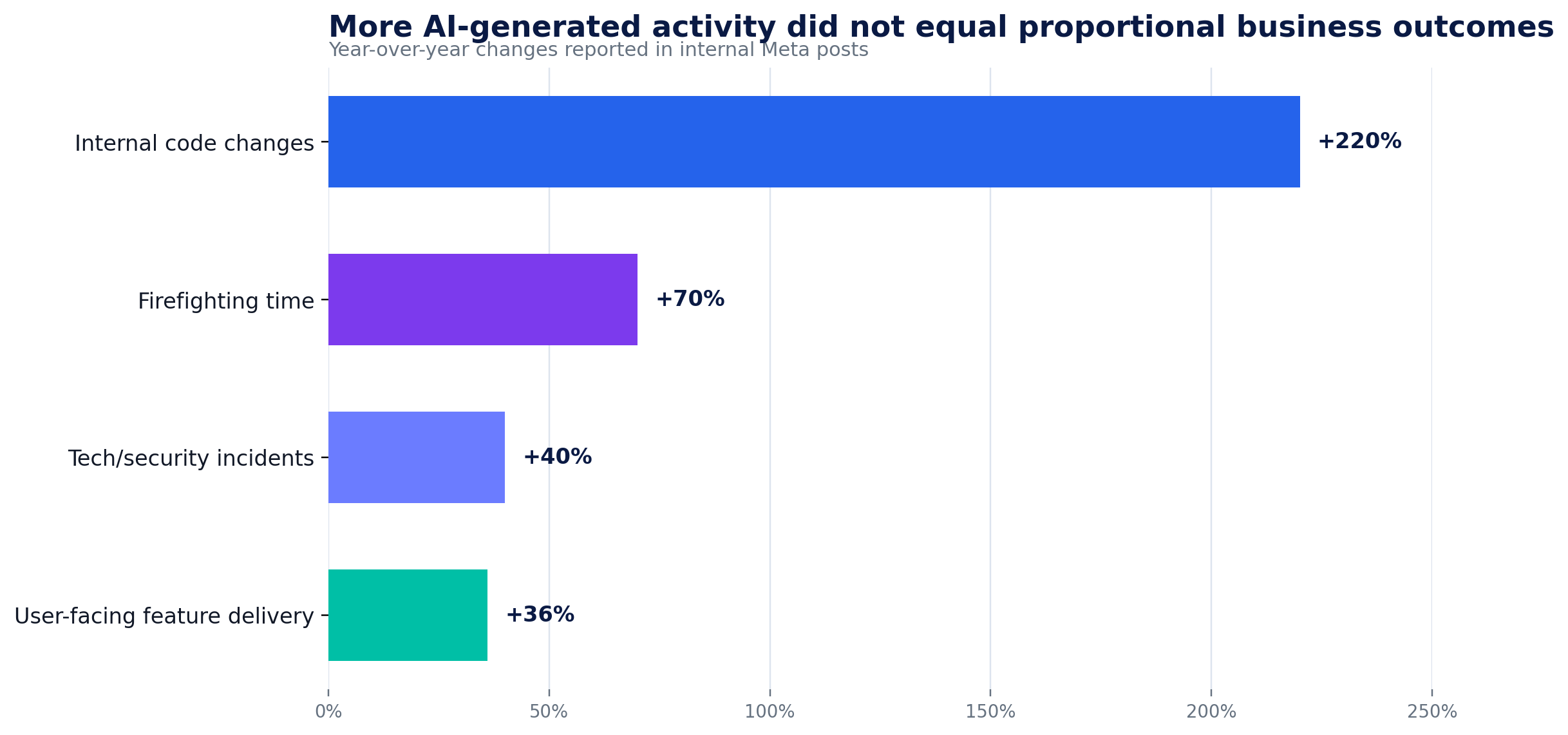
The most important evidence was not the size of the contemplated cuts. It was the gap between activity and outcome. Reuters cited internal posts reporting that code changes to internal platforms and infrastructure rose 220% year over year, while changes that delivered new or upgraded features to users rose only 36%. Technical and security incidents reportedly increased 40%, and time spent firefighting them rose 70%. Meta declined to comment to Reuters on those internal disruption figures.[1]
THE BIG 3 · 02
Google moved AI deeper into professional systems
On August 25, Google Cloud announced Gemini Enterprise for Legal and Gemini Enterprise for Financial Services, both available in preview. Google's design is significant because it does not present a general chatbot as sufficient for high-stakes professional work. The company instead describes four layers: purpose-built skills, secure connections to trusted systems and data, agents that act within workflows, and an open partner ecosystem, all under a governed control plane.[2][3]
For legal teams, Google lists contract review, regulatory scanning, research, document redaction and data-request workflows. For financial institutions, it lists research, KYC analysis, credit and portfolio work, and issuance workflows. These are Google product claims for preview offerings; this article did not independently test their accuracy, reliability, pricing, availability or production readiness.[2][3]
A practical career exercise
- Choose one recurring workflow in your profession.
- Name the authoritative inputs and the rules that govern the work.
- Separate steps AI may execute from decisions a qualified person must own.
- Define the evidence a reviewer needs before accepting the output.
- Turn the result into a portfolio story showing speed, quality, risk control and judgment.
THE BIG 3 · 03
OpenAI pushed agents into the administrative control layer
OpenAI introduced an Admin plugin for ChatGPT Work and Codex on August 25. According to OpenAI, authorized administrators can review adoption and credit usage, manage members and groups, inspect effective permissions, change access, manage limits and route approval requests through connected workflows. OpenAI says the plugin preserves existing roles and permissions rather than granting new access.[4]
The company also reported that one internal IT deployment resolved about 45% of support-ticket volume while support volume roughly doubled. That is a vendor-reported internal result, not an independent benchmark. The plugin was not installed or tested for this article, and readers should verify current availability, controls, pricing and applicable data policies before adoption.[4]
CAREER IMPACT
The experience premium is becoming a judgment premium
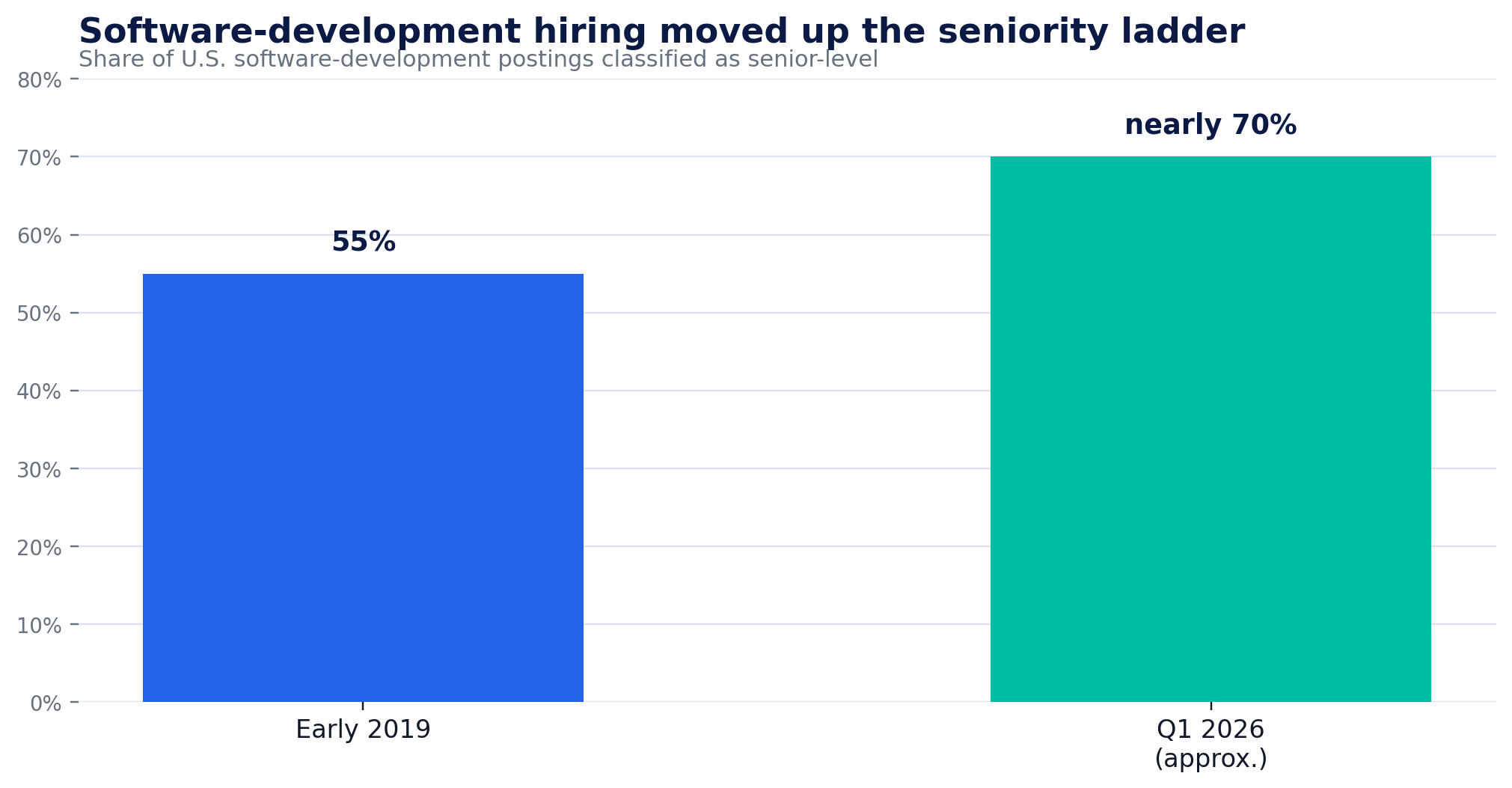
This week's hiring signal appeared most clearly in software development. Business Insider reported, citing Indeed analysis, that nearly 70% of U.S. software-development postings in the first quarter of 2026 were classified as senior-level, up from 55% in early 2019. Software-development postings had also risen about 15% in June from early 2025, but the recovery was concentrated in senior work.[6]
That pattern does not prove AI caused the shift. Indeed's economist cited normalization after a long tech hiring slowdown as another factor, and Stanford researchers caution that interest rates, pandemic-era overhiring and remote-work effects complicate claims about AI and early-career employment.[6][7]
What this means by career stage
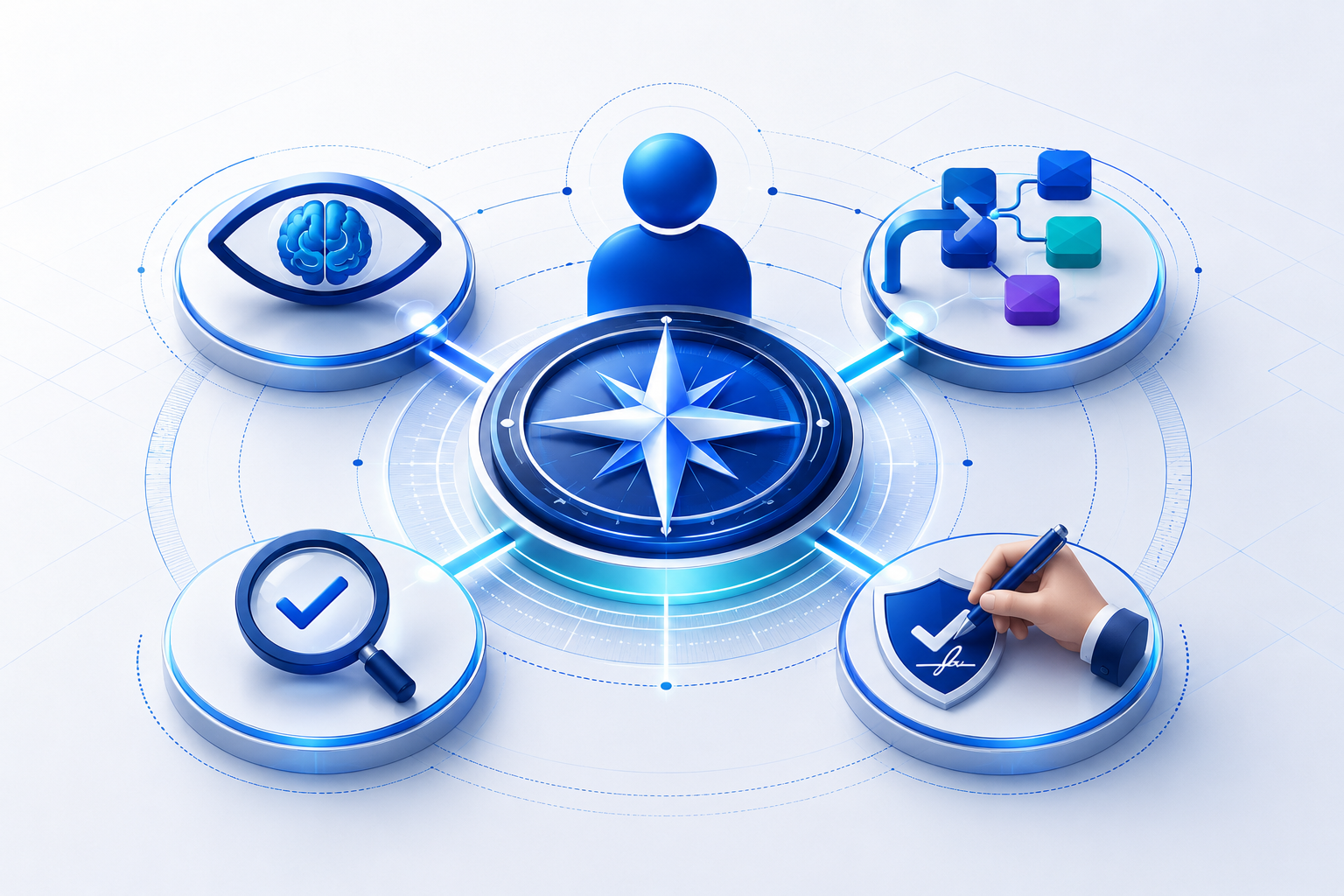
- Early career: Build evidence of judgment sooner. Use projects, supervised work, case studies and portfolio artifacts to show that you can verify AI output rather than merely generate it.
- Mid-career: Convert experience into reusable playbooks. Show how you define rules, improve workflows, coach others and manage exceptions.
- Senior and executive: Prove that you can choose where AI belongs, govern risk, redesign work and connect adoption to measurable business outcomes.
THE BROADER ADOPTION SIGNAL
AI use is broad - but still concentrated.
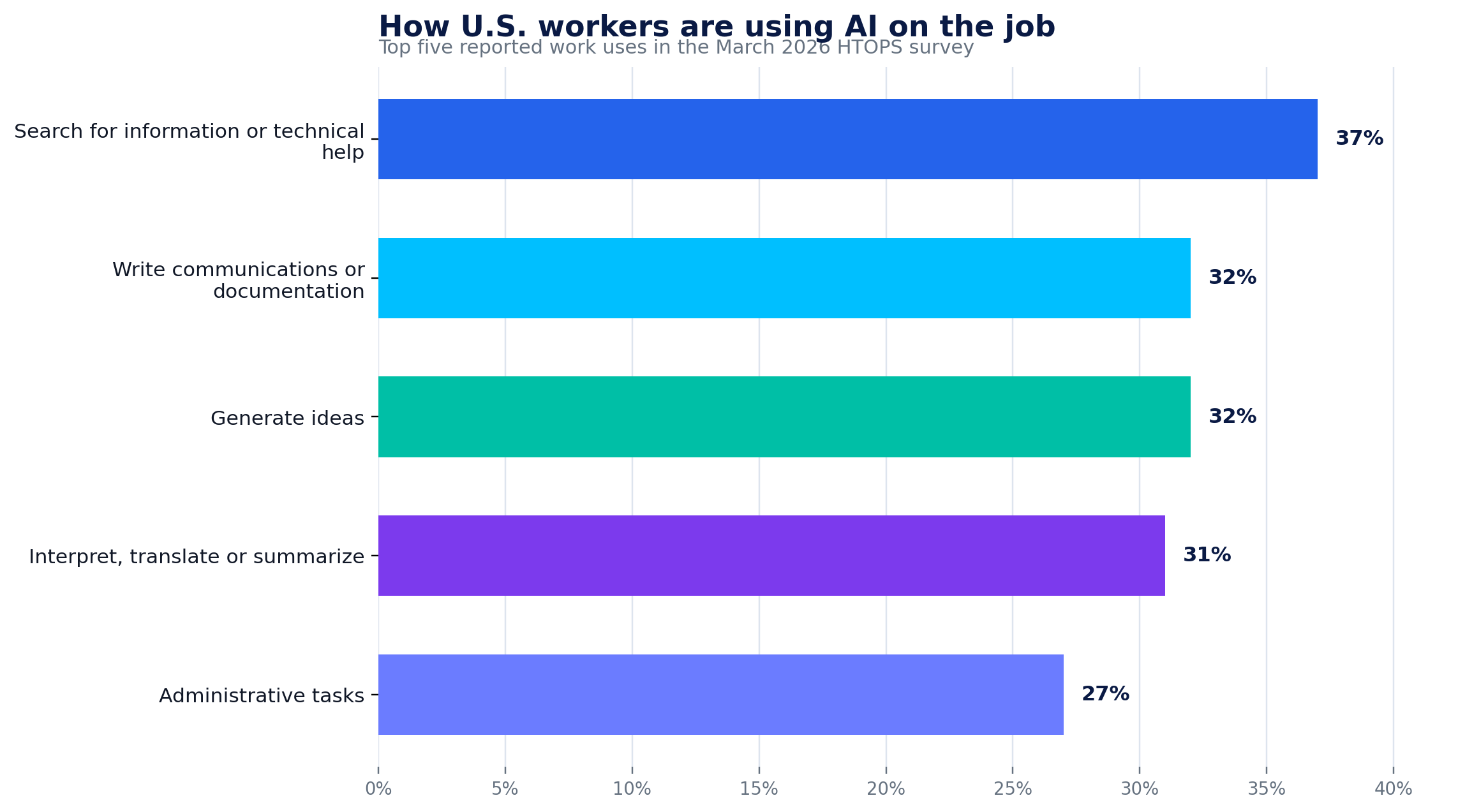
A U.S. Census Bureau survey provides useful context for this week's news. In the March 2026 Household Trends and Outlook Pulse Survey, 55% of U.S. workers said they had used AI on the job for at least one of 11 listed tasks. The most common uses were searching for information or technical help, writing, idea generation, interpretation or summarization, and administrative work.[5]
Among workers who used AI for any listed work task, 24% reported daily use in the previous week, 46% used it on at least one day but not every day, and 30% did not use it during that week. Among those who used AI in the prior week, 31% said it saved one to two hours and 25% said it saved less than one hour.[5]
MANAGER & LEADER IMPACT
Build an operating model, not a slogan
The Meta reporting and this week's enterprise launches point toward the same leadership lesson. AI becomes useful when the organization defines the work around it. Leaders should resist both extremes: treating AI as a minor personal productivity tool, or treating it as a universal justification for immediate headcount reduction.
A five-part implementation discipline
- Workflow: Select a workflow, not a workforce target. Choose a bounded process with a known customer, owner and outcome.
- Baseline: Record current quality, cycle time, cost, error rates, escalation volume and customer impact before automation.
- Accountability: Name the sponsor, operator, reviewer, exception owner and person authorized to accept the result.
- Pilot: Capture sources, decisions, exceptions, overrides and failure patterns. Do not scale around anecdotal time savings.
- Scale: Expand only after demonstrated quality, reliability, risk control and measurable value.
TOOLS WORTH KNOWING
Two enterprise releases to watch - not blindly adopt
Gemini Enterprise for Legal and Financial Services
Why it matters: Google is packaging agents around industry-specific skills, trusted systems and governance rather than relying on a general model alone. Status: available in preview according to Google. Verification: product capabilities, performance, pricing and production readiness were not independently tested for this article.[2][3]
Admin plugin for ChatGPT Work and Codex
Why it matters: conversational AI can now sit closer to the administrative control layer, where actions must respect permissions and produce confirmation. Status: announced by OpenAI on August 25. Verification: the plugin and OpenAI's internal performance claims were not independently tested for this article.[4]
WHAT'S HYPE OR OVERSTATED
Four claims that deserve resistance
- Hype: AI-native automatically means dramatically smaller teams. Reality: smaller teams can fail when workflows, authority, measurement and trust are not redesigned.
- Hype: More generated output equals more productivity. Reality: output can increase while customer value, reliability and employee capacity lag.
- Hype: One prompt course creates career security. Reality: tools change quickly; domain judgment, verification and accountable execution transfer across tools.
- Hype: AI is already causing an economy-wide jobs collapse. Reality: Stanford's July review found aggregate employment effects likely remain small, while early-career disruption may be emerging in specific exposed roles. The evidence is mixed and evolving.[7]
WHAT TO WATCH NEXT
The next evidence will matter more than the next announcement.
- Whether Meta's paused second restructuring wave remains off the table and whether internal outcome metrics improve.
- Whether legal and financial AI vendors publish independent reliability, error, security and return-on-investment evidence beyond launch partnerships.
- Whether employers add explicit requirements for agent orchestration, workflow design, AI governance, source verification and exception management.
- Whether companies protect the early-career talent pipeline through apprenticeships, supervised AI-enabled work and deliberate skill development.
- Whether AI performance measures shift from volume and time saved toward customer value, risk reduction, decision quality and sustainable capacity.
THE MYTOPMATCH TAKEAWAY
Your advantage is not AI use. It is trusted judgment.
Your career is not protected by avoiding AI. It is not protected by using every new tool either. It becomes stronger when your value sits at the intersection of domain judgment, measurable outcomes, trust and the ability to direct AI safely. The professionals who stand out will not be the people who produce the most AI-assisted work. They will be the people employers trust to decide what work should be done, what good looks like and when the system is wrong.
Create Your Free Professional PassportSOURCES & EVIDENCE NOTES
What this article relies on
- [1] Reuters Special Report, August 26, 2026Original reporting based on internal Meta documents, posts, recordings and interviews. Meta declined to comment on several internal data points.
- [2] Google Cloud: Gemini Enterprise for Legal, August 25, 2026Primary vendor announcement. Preview status and capabilities are vendor claims.
- [3] Google Cloud: Gemini Enterprise for Financial Services, August 25, 2026Primary vendor announcement. Preview status and capabilities are vendor claims.
- [4] OpenAI: Admin plugin for ChatGPT Work and Codex, August 25, 2026Primary vendor announcement. Internal support-ticket performance is vendor reported.
- [5] U.S. Census Bureau: AI use at work, August 11, 2026Government survey summary based on the March 2026 Household Trends and Outlook Pulse Survey.
- [6] Business Insider: Software engineering is becoming a senior engineer's game, August 24, 2026Secondary reporting citing Indeed analysis and an Indeed Hiring Lab economist. The nearly 70% value is approximate.
- [7] Stanford SIEPR: What is really happening to jobs? July 2026Research synthesis distinguishing aggregate employment evidence from possible early-career effects and other confounding factors.