
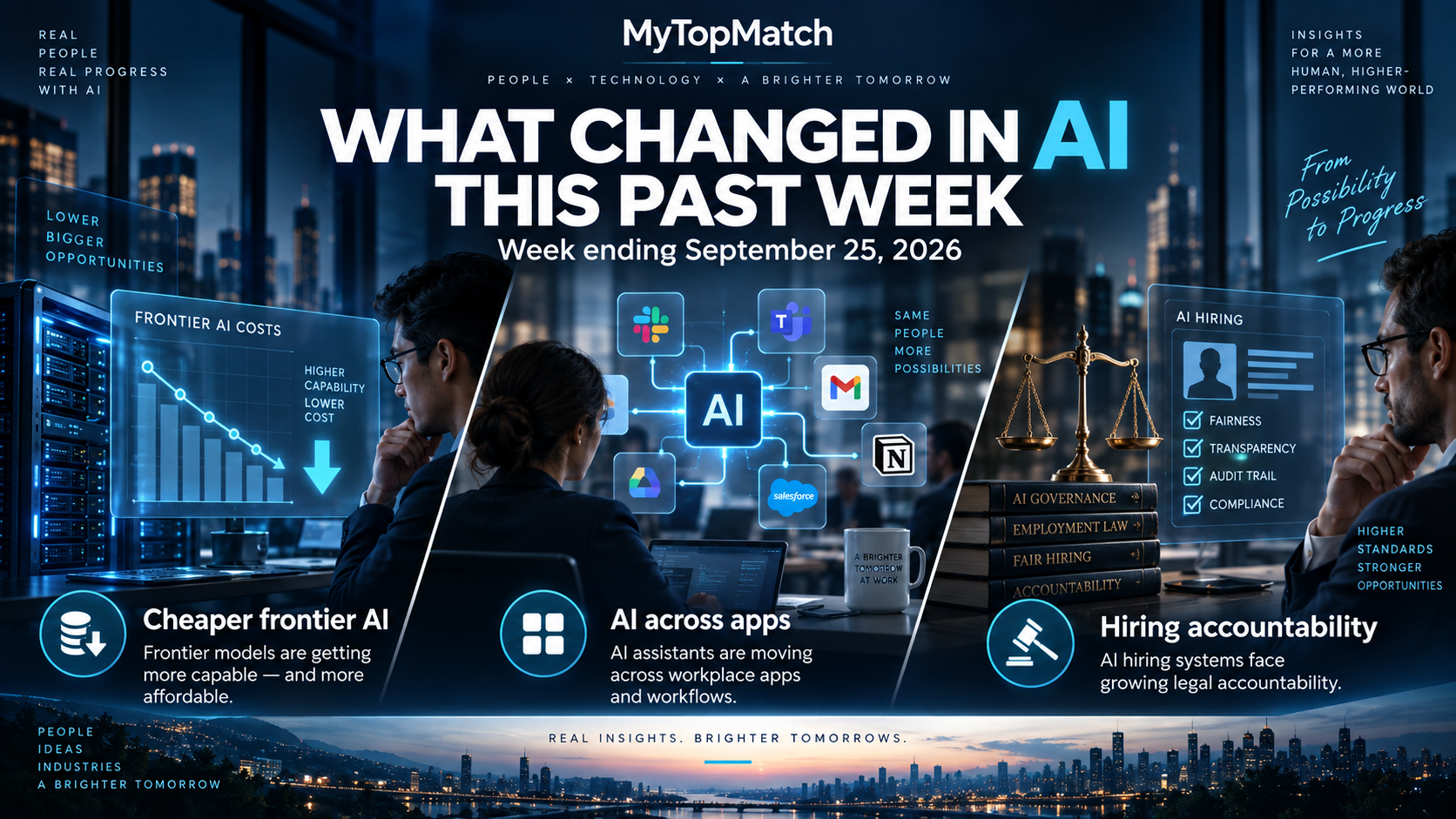
This week’s consequential AI developments were less about flashy demos and more about the economics and structure of work. Advanced models became substantially cheaper, AI assistants moved deeper into the software people already use, and a closely watched hiring-discrimination case raised the stakes for employers using algorithmic screening.
THE BIG 3
1. Frontier-level AI became materially cheaper
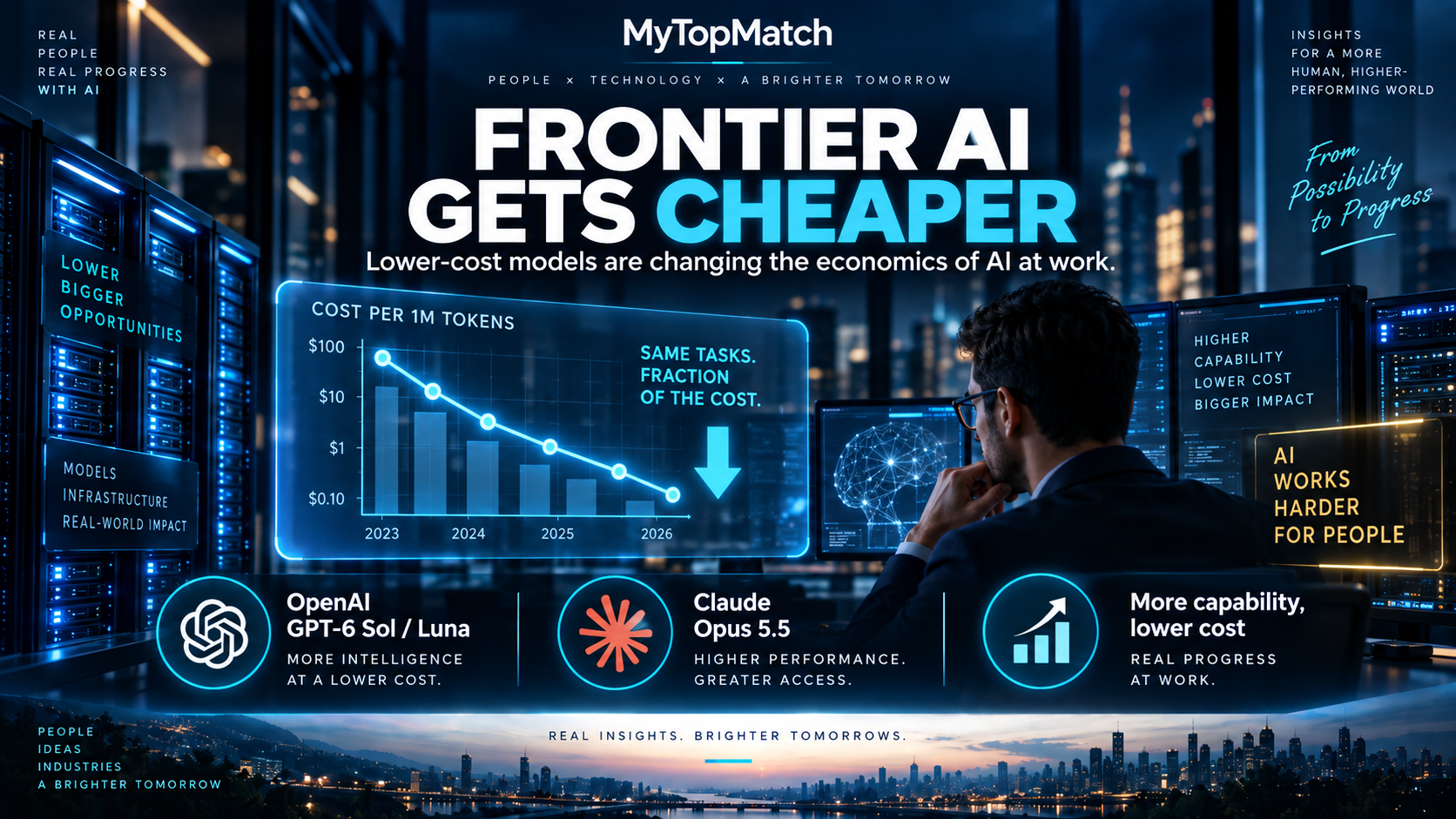
What happened: OpenAI released GPT-6 Sol and GPT-6 Luna on September 22 for professional and high-volume work. Published API prices are $2 per million input tokens and $10 per million output tokens for Sol, and $0.10/$0.50 for Luna. OpenAI describes the reduction from GPT-5.6 promotional pricing as 50%; its table shows an even larger reduction for Luna output tokens. The models launched in ChatGPT Work, Codex and the API, with standard Chat availability separate. [1, 4]
On the same day, Anthropic released Claude Opus 5.5 at $4 per million input tokens and $20 per million output tokens. Anthropic says typical workloads cost about 40% less than Opus 5 through lower prices and improved token efficiency. It also reports stronger coding, computer-use and knowledge-work performance while cautioning that small benchmark margins can overstate real-world differences. Treat those performance and workload-savings claims as vendor-reported, rather than guaranteed results. [2]
MyTopMatch analysis: The important change is the economics. Businesses can reserve expensive models for demanding assignments and evaluate cheaper models for routine work. Lower prices expand the range of workflows worth testing; they do not establish that any particular deployment will earn a return.
For professionals, access to AI will become less differentiating. Knowing how to assign work, supply context, evaluate results and recognize when human judgment is required becomes more valuable.
2. AI assistants are moving across applications
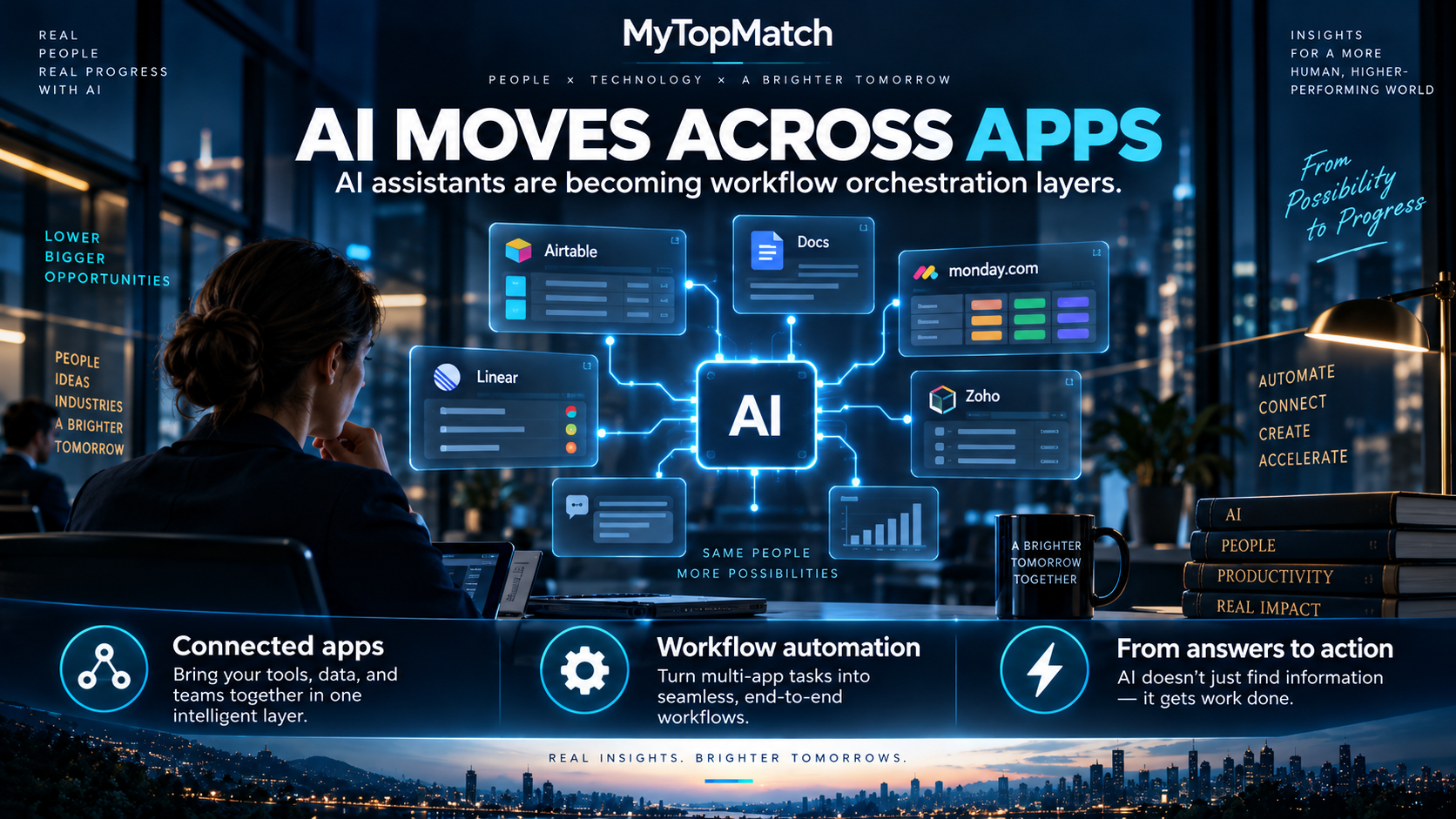
What happened: Google began rolling out another wave of Gemini Connected Apps on September 23. Productivity integrations include Airtable, Linear, monday.com, PandaDoc, Wispr AI and Zoho, alongside creative services such as Adobe, Squarespace and Webflow. Users can bring those services into a Gemini conversation. Availability and permissions vary by application and account. [3]
OpenAI’s September 23 release notes describe plugin and connected-app support during Voice conversations. Voice in ChatGPT Work can create documents, presentations and spreadsheets, use connected apps and perform browser work. Existing plan access, app permissions and usage limits still apply. [4]
MyTopMatch analysis: AI is becoming a coordination layer across software. The workplace question is expanding from whether AI can write an answer to whether it can complete a useful workflow.
That increases productivity potential while also increasing the importance of permissions, data access, verification and accountability. Giving an AI system access to several business systems creates more leverage and more ways for an error to spread.
3. AI hiring systems face a serious accountability test
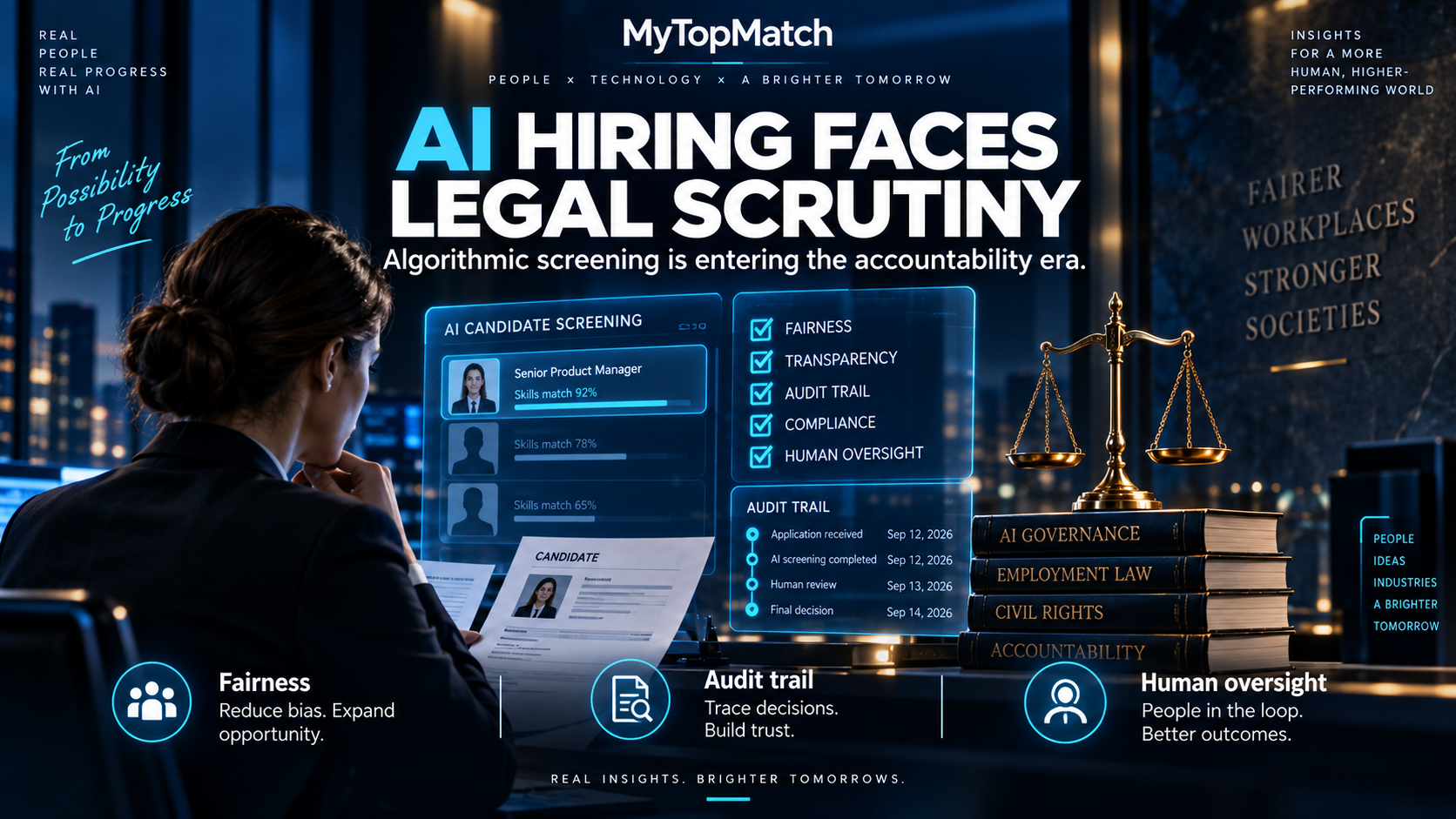
What happened: Reuters reported September 21 that plaintiffs in Mobley v. Workday are seeking class certification over alleged race, sex, age and disability discrimination in AI-assisted hiring. Workday denies wrongdoing. No finding of discrimination has been made. A class-certification hearing is scheduled for March 9, 2027. [5]
MyTopMatch analysis: Employers need a clear account of how recruiting technology influences decisions. A software purchase should come with responsibilities for evaluating the system, documenting its use and reviewing consequential outcomes.
Hiring leaders should understand what their systems screen, rank or reject; which data those systems use; whether outcomes are evaluated for disparate effects; and where human review is available. Candidates should also avoid assuming that every rejection was automated or discriminatory.
Career Impact
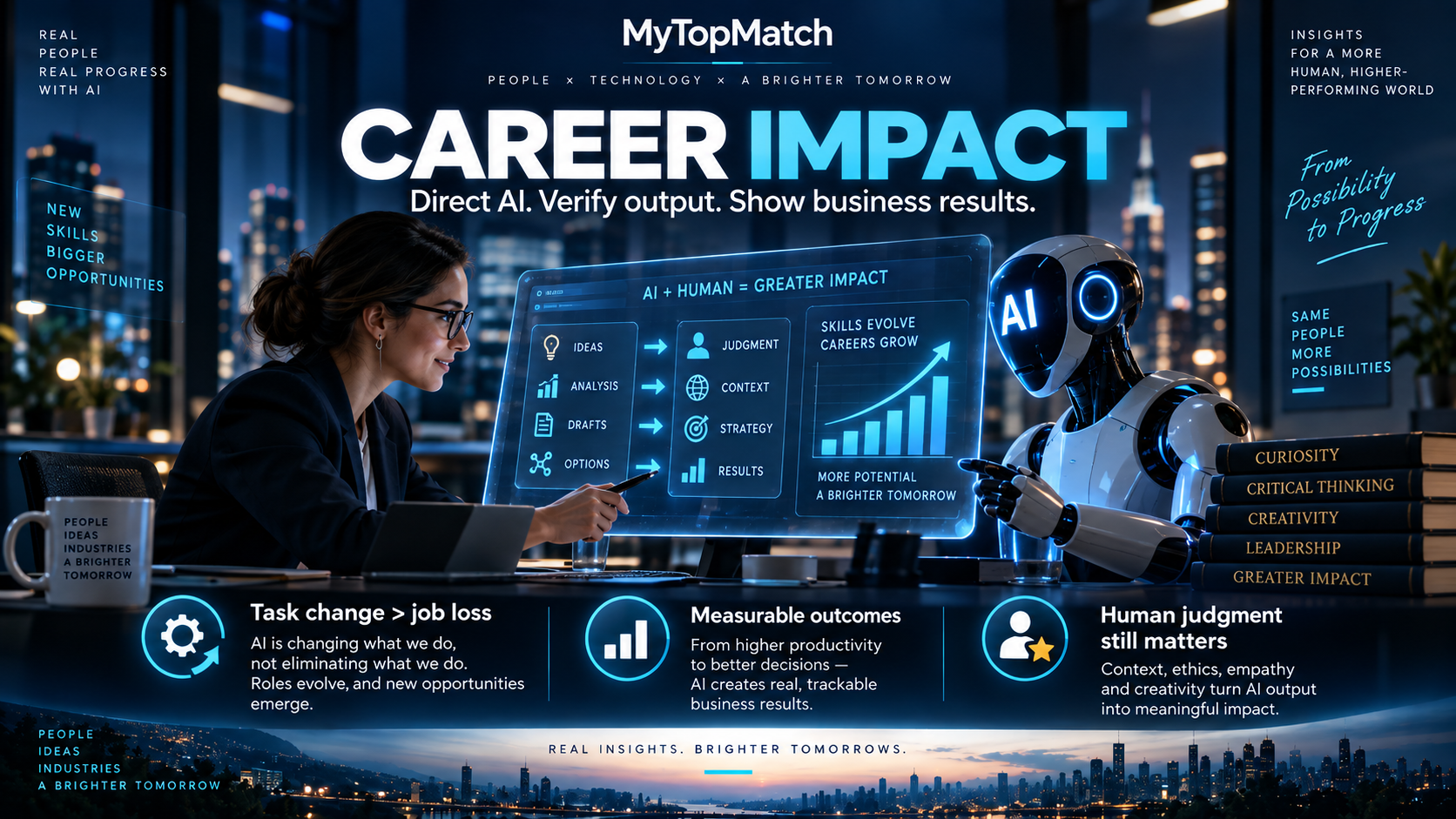
The emerging career advantage is moving beyond basic AI familiarity. A professional who can define a business outcome, delegate appropriate work, verify the output and demonstrate an improvement has a stronger capability than someone whose résumé merely lists AI tools.
Background context: Research summarized by the St. Louis Fed on September 1—not newly published this week—found broad but shallow adoption. In more than 80% of occupations, at least one in five workers reported using AI; fewer than 3% of detailed tasks had adoption rates above 50%. The underlying NBER working paper was issued in August 2026. [6, 8]
That suggests career planning should focus on which tasks inside an occupation are changing, and how workers can demonstrate value as the work evolves. These adoption measures do not, by themselves, establish future employment outcomes.
Manager and Leader Impact
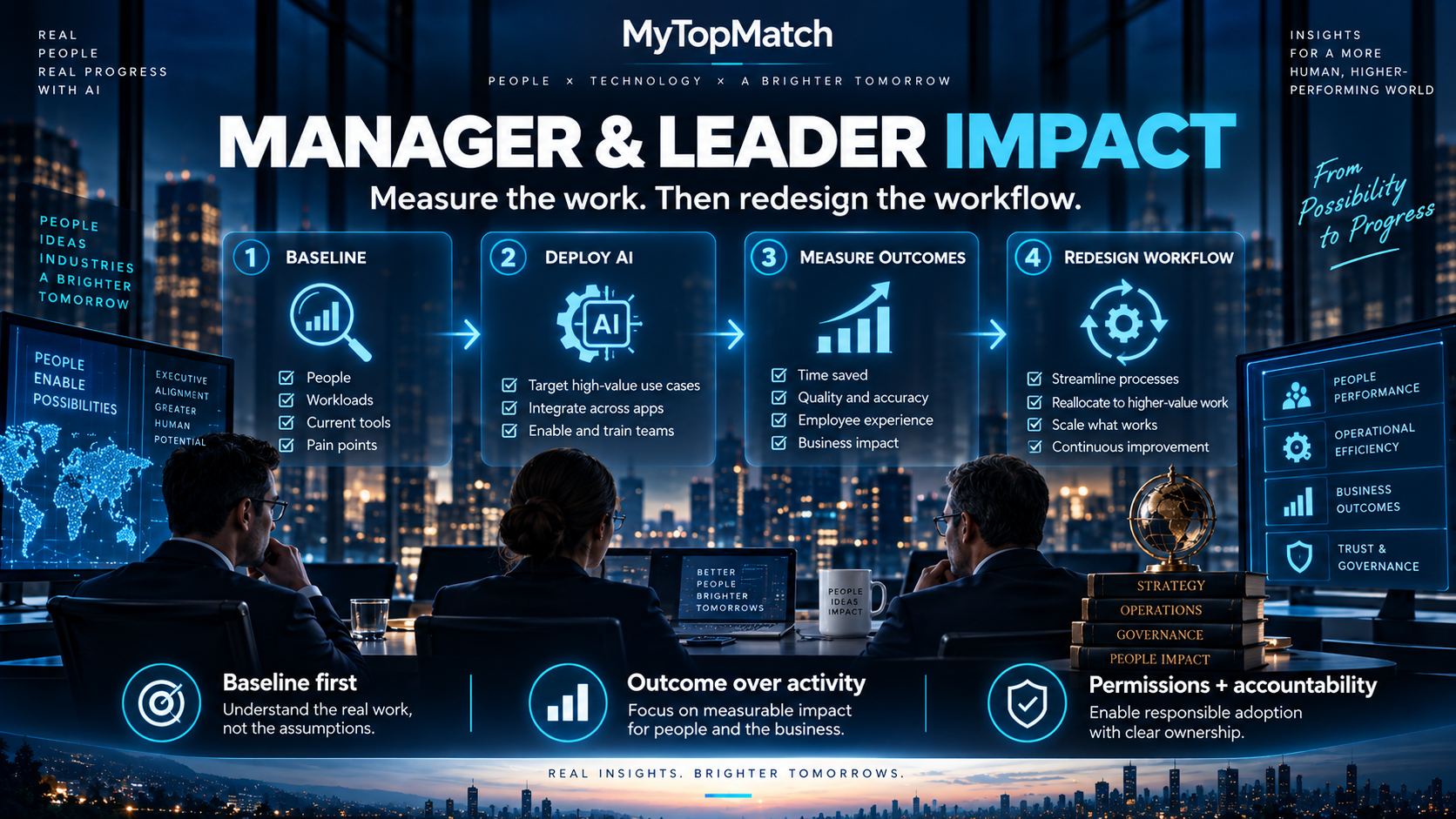
Managers now have a more difficult challenge than simply encouraging employees to use AI. The organization needs to determine whether AI is actually improving an outcome.
Establish the baseline first: time, quality, revenue, cost, error rate or another meaningful performance measure. Then introduce AI and compare the result. If performance improves, redesign the workflow around evidence. If it does not, identify the barrier before expanding the system.
The rapidly falling price of models can make testing more affordable. It does not make ineffective workflows valuable. Leaders should also decide who remains responsible when an agent acts across several applications, and where authorization, auditability and human review are required.
Tools Worth Knowing
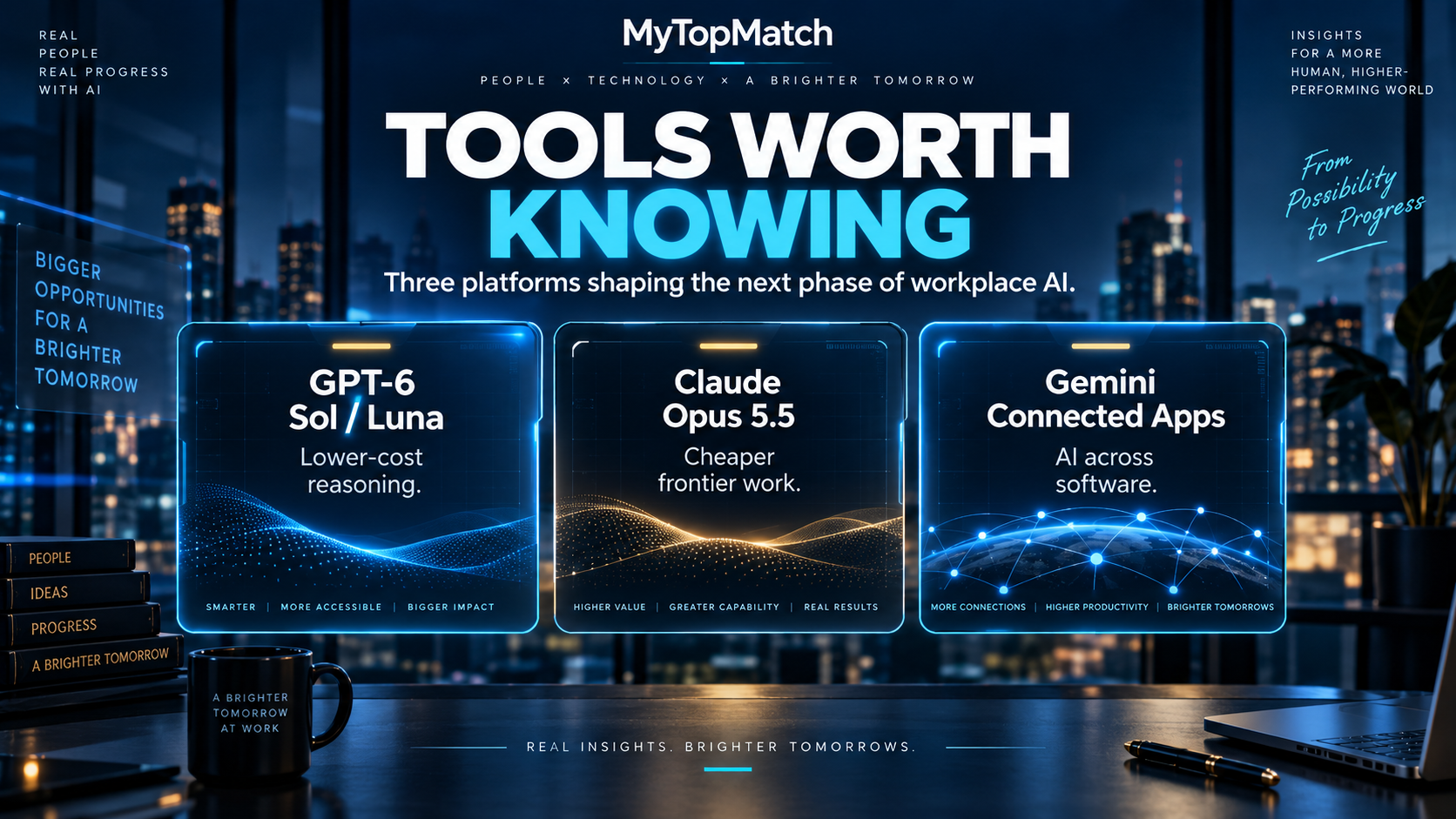
GPT-6 Sol / Luna: lower-cost reasoning and professional work. Published standard API prices per million tokens are $2 input/$10 output for Sol and $0.10/$0.50 for Luna. [1]
Claude Opus 5.5: coding and knowledge work at $4 input/$20 output per million tokens. Anthropic’s broader efficiency claims remain workload-dependent. [2]
Gemini Connected Apps: a view of AI operating across everyday workplace software. The September 23 rollout covers additional productivity and creative applications. [3]
These are tools worth understanding rather than automatic purchase recommendations. Evaluate a small, non-sensitive workflow with a predetermined result, a spending limit and a pass/fail measure before expanding usage.
What’s Hype or Overstated
The claim to resist is that increasingly capable agents automatically establish widespread job elimination—or establish that no jobs will be lost.
The Wall Street Journal reported this week on startups keeping teams small or reducing staff while AI takes on additional work. Those examples show changing staffing economics; they do not establish one outcome for every organization or occupation. [7]
The background labor research also distinguishes worker-survey evidence from AI-platform chat logs. Conversations can reveal an activity while leaving the user’s occupation and business purpose unclear. Different measurement approaches answer different questions. [6, 8]
MyTopMatch analysis: AI changes tasks unevenly. Outcomes will depend on the work, implementation decisions and the organization’s ability to turn added capacity into useful results.
What to Watch Next
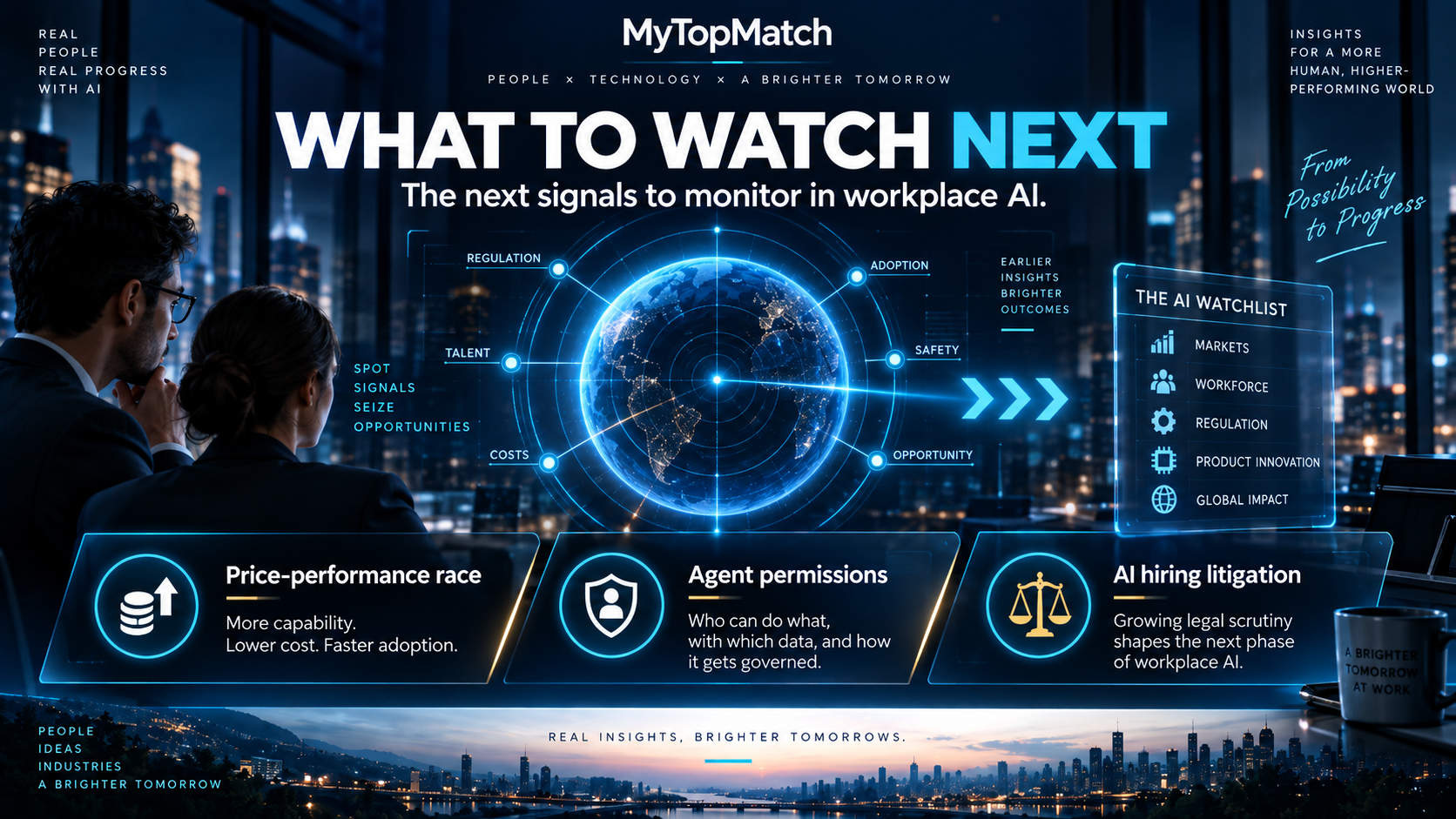
Watch the price-performance race. OpenAI and Anthropic lowering the cost of capable models in the same week could change which business uses are financially practical. [1, 2]
Watch agent permissions and governance. As assistants reach email, documents, project platforms and browsers, leaders need clear boundaries on access and action. [3, 4]
Watch the AI hiring case as it proceeds. The allegations remain disputed. [5]
The larger shift
AI capability is becoming cheaper. AI access is becoming broader. AI is moving closer to actual work.
That increases opportunity for professionals who combine technology with judgment, expertise and measurable results. It also increases the importance of understanding what an AI system is doing before depending on it.